
Portfolio
A curated collection of projects across manual design vector, web design and engineering.

Vector Illustration
Silhouette and vector art designed in Corel Draw for various creative projects.

Travel & SAP Settlement
Corporate travel engine with multi-level DPH approval, self-booking & SAP ERP integration.

Digital Portfolio
Living digital platform built on continuous improvement, performance tuning & modular UX.

Employee Rewards CRM
Mobile-responsive employee rewards & compensation portal with payslip integration.

Hotel Reservation
Intuitive hotel booking engine and room reservation flow built with responsive HTML & CSS.

FMCG Loyalty CRM
Multinational loyalty CRM with gamified spin wheel and real-time serial validation.
Project Showcase
End-to-end projects from architecture to delivery — each with a live UI mockup re-build from the actual screens.
Career Timeline
10+ years of progressive growth across implementation, data engineering, and software development.
Skills
A broad technical stack spanning software engineering, data architecture, and business intelligence.
 HTML & CSS
6 yrs
HTML & CSS
6 yrs
 JavaScript
6 yrs
JavaScript
6 yrs
 ASP.NET / .NET Core
6 yrs
ASP.NET / .NET Core
6 yrs
 Razor Page MVC
6 yrs
Razor Page MVC
6 yrs
 Vue JS
3 yrs
Vue JS
3 yrs
 ETL (SSIS / Pentaho / Talend Studio)
4 yrs
ETL (SSIS / Pentaho / Talend Studio)
4 yrs
 SQL Optimization
9 yrs
SQL Optimization
9 yrs
 Python (pandas, pydantic, openpyxl)
2 yrs
Python (pandas, pydantic, openpyxl)
2 yrs
 n8n (Workflow & Pipeline Automation)
1 yr
n8n (Workflow & Pipeline Automation)
1 yr
| Skill / Task | Utility Type | Description |
|---|---|---|
|
Python Data Pipelines
|
Ingestion / Cleansing | Automated batch ingestion, validation (pandas, pydantic, openpyxl) & ORM mapping |
|
SSIS ETL
|
Integration / Transformation | Microsoft's drag-and-drop ETL tool for enterprise data pipelines |
|
Pentaho (Kettle)
|
Integration / Transformation | Open-source, flexible ETL development for complex workflows |
 Talend Studio
|
Integration / Transformation | Enterprise-grade data integration, big data, and cloud transformation |
 Azure Data Factory
|
Integration / Orchestration | Cloud-based data integration service for orchestrating and automating data movement and transformation |
|
|
BI Enablement | Structuring and modeling data for Power BI, Tableau & MicroStrategy |
|
Data Virtualization
|
Real-Time Data Access | On-demand reporting without moving data using Denodo platform |
|
Migration & Cleansing
|
Quality & Movement | Accurate data transfer + smooth system transitions during upgrades |
 Data Warehousing
|
Storage & Analytics | Long-term centralized insights hub for enterprise analytics |
Personal Notes
Thoughts, concerns, and personal reflections over time.
As long as this signal moves, the system has not flatlined.
A personal reflection: on exhaustion and the reasons one goes through life—a system in constant motion.
As long as this signal keeps moving,
the system has not flatlined.
Exhausted. Afraid. Trapped.
The weight of today feels immense, and the future is uncertain — and that's okay. We don't need to worry about it. We just need to face it, one step at a time.
The impulse to stop comes most easily when energy runs thin. But look at the monitor above — the signal is still pulsing. That electrical beat tracing across the screen is an objective fact: the system is still alive.
And a living system always has the capacity to recover, to recalibrate, and to improve.
An ECG does not measure how powerful a heart is — it measures whether electricity is still flowing through the sinoatrial node. This digital portfolio shares the same anatomy. An active signal does not imply absolute perfection. An active signal means: there is movement, there is code experimentation, there is honest reflection, and there is continuous improvement.
Primary symptoms: grand aspirations without concrete planning, execution without clear direction, and mental energy cycling endlessly without measurable output. It is a misdiagnosis to label this as failure — Lazy Ambition is not a fatal flatline; it is an arrhythmia signal. The electrical current is still present; only its conduction has lost its rhythm.
Four fundamental questions. Answer them with absolute honesty. The intersection of all four is the new directional vector to pursue.
That which makes you lose track of time late at night. Work undertaken from pure curiosity — not obligation, not the hunger for validation.
Kahneman would call this System 1 at its most unguarded — the pull that exists before logic intervenes, before the mind constructs a justification. It is not a preference. It is a signal. The problems you return to without being asked. The thing you sketch on a blank page when no one is watching. The moment something complex finally coheres and something in you recognises it before you can explain why.
It might be systems and the people who depend on them. It might be the craft of making something difficult feel effortless to the person on the other end. Whatever it is — that quiet pull is not incidental. It is directional. Follow it.
What others entrust to you when the problem seems unsolvable. The thing people bring to you last, after everything else has been tried.
But here is what most people miss: true competence is not just skill — it is the fusion of experience, time, and intuition. Kahneman calls it System 2 becoming System 1. The thousands of hours spent pattern-matching, rebuilding, and recovering from failure — until the answer arrives not through calculation, but through feel. That quiet certainty before you can fully articulate why. The decision that lands in the first five minutes of a room, before the whiteboard is touched. The instinct that tells you something is wrong before the data confirms it.
That is not luck. That is accumulated intelligence made instinct. It is the hardest thing to replicate — and the most honest signal of where your real contribution lives.
(Sample: root cause engineering, end-to-end architecture, translating complexity between technical and business stakeholders — the kind of work that requires someone who can hold the whole system in their head at once.)
Not what the market is chasing. Not the trend. What actually resolves friction for real people operating under real pressure.
Kahneman's quieter insight applies here: people and organisations make decisions through System 1 far more than they admit. A solution that requires explanation to trust has already failed. A system that produces correct outputs but generates no confidence in the people using it has already failed. The world does not only need things that work. It needs things that feel reliable — that communicate their own integrity clearly enough that the people depending on them can act without hesitation.
The need, then, is not just for capability. It is for clarity. Systems, services, and solutions that are honest about what they do — and consistently deliver on that honesty under real operational conditions.
Not a moment of visibility that resets to zero the morning after.
What sustains is being embedded — present from the first ambiguous conversation through to the last check before something goes live. The full arc. That is where value compounds, and where the exchange becomes honest.
The world does not need more people who deliver a scope and disappear. It needs people who stay in the room long enough to understand why the original scope was wrong — and rebuild without ego, without friction, and without losing the trust of the people who asked for it in the first place.
Competence deepens with context. The longer someone operates inside a problem, the more their intuition is calibrated to its specific gravity. That kind of embedded, compounding value cannot be replicated by someone parachuted in at the handoff stage.
What sustains, then, is a long-term engagement model — retainers, partnerships, leadership roles with enough runway to do real work. An honest, repeatable exchange of value. Not a transaction. A relationship built on the only currency that survives long enough to matter: consistent, reliable delivery from the root cause to the result.
This is not a metaphor. It is technical reality: if a portfolio is never updated, no new reflections are written, no new projects are shipped, no direction is recalibrated — its ECG signal collapses into this:
Asystole is not the result of insufficient talent. Asystole occurs because the current stops flowing — initiative ceases, reflection ceases, motion ceases. A portfolio left unmaintained is a portfolio that has already died, regardless of whether its domain server remains accessible.
Stay focused. Remember that line. Every day filled with iteration — however modest the commit — is a heartbeat that counts. Not because anyone is watching. Not because the result is perfect. But because a living system is one that never stops moving. Deliver your finest quality and fullest effort, until asystole arrives of its own accord — not because you chose it prematurely.
Six Data Topologies, Six Real Systems: A Technical Cross-Reference
A revised technical reference mapping six portfolio theme geometries to distributed architectures, storage engines, and consensus protocols, with the underlying research cited rather than assumed.
A visual interface and its backend architecture are usually treated as separate concerns: one is
designed, the other is engineered. This note takes the opposite position for a narrower reason
than
aesthetics. Each of the six portfolio themes below was built as a structural analogy for
a
specific, identifiable class of production data system — not as decoration applied
after the
fact.
After several years working across pipelines, warehouses, BI layers, and transactional
systems, I find
that most diagrams claiming to represent architecture actually represent intent. The revision
below
corrects that gap: every visual claim is checked against the paper or system documentation it
is
supposedly based on, and adjusted where the original description was imprecise or overstated.
The reference below maps each theme to its closest real-world equivalent — Cassandra-style and
Spanner-style replication, Airflow-style DAG orchestration, Snowflake-style columnar pruning,
Kafka-style partitioning, Druid-style OLAP ingestion, and two-phase commit in financial-grade
transaction systems — and, where the original mapping conflated distinct mechanisms, separates
them.
#DataEngineering
#SystemArchitecture #DistributedSystems #DataPipeline #ColumnarStorage #EventDriven #ACID
#Observability
Six Topologies, Cross-Checked:
Visual Geometry →
Cited Production Systems
An interactive reference showing how each theme's conduits, packets, and telemetry correspond to a specific mechanism in distributed systems literature — with the simplifications made explicit rather than implied.
⚡ Stellar — Distributed Cloud Mesh
CLOUD::BACKBONENote: the systems named below do not share one consistency model. Cassandra, CockroachDB, and Spanner are grouped here by topology (multi-region replication), not by guarantee — see the distinction drawn in the third card.
Cross-Datacenter Cluster Replication
This represents any database that maintains copies of data across geographically separate data centres — Apache Cassandra, CockroachDB, and Google Cloud Spanner all do this, though by different mechanisms (see below). The purpose is the same in each case: if one region becomes unreachable, the system keeps serving reads and, in most configurations, writes from the surviving regions.
Failover Routing and Ring Rebalancing
The bypass line stands for what happens when a primary route fails: traffic is redirected along a surviving path. In practice this takes different forms depending on the layer — BGP route convergence at the network level, or partition reassignment on a consistent hashing ring at the database level, as used in Cassandra's ring topology (DeCandia et al., 2007).
Two Distinct Replication Disciplines — Not One Binary Choice
This is where the three systems named above actually diverge, and it is worth being
precise about it:
• Cassandra is AP-oriented in Brewer's CAP framing (Brewer,
2000;
Gilbert & Lynch, 2002). It does not enforce one fixed sync/async mode —
consistency is
tunable per query through the read/write quorum settings described in the original
Dynamo
paper (DeCandia et al., 2007).
• CockroachDB and Spanner are CP-oriented. They use a
consensus
protocol — Raft in CockroachDB's case (Ongaro & Ousterhout, 2014), Paxos plus a
synchronised clock in Spanner's case (Corbett et al., 2012) — to guarantee that a
write is
durable across a quorum before it is acknowledged.
The cyan/violet split is a useful simplification of "coordinated" versus "lagging"
replication, but it should not be read as implying all three systems offer the same
choice.
CLOUD::BACKBONE
Observability
Structured Tracing and Span Telemetry
The tag format follows the service::component convention used in
OpenTelemetry span naming, feeding dashboards such as Grafana or Datadog. The metrics
that would actually populate such a dashboard include replication lag, inter-region
round-trip time, and packet loss — the 12ms figure shown is illustrative, not
measured.
| Visual Theme | Architectural Paradigm | Underlying Mechanism | Typical Latency Profile | Representative Stack |
|---|---|---|---|---|
| ⚡ Stellar | Distributed Cloud Mesh | Multi-region replication — tunable quorum (Cassandra) or consensus-based (CockroachDB, Spanner) | 10–80 ms (inter-region RTT) | CockroachDB, Cassandra, Spanner, AWS TGW |
| 🌿 Void Mint | ETL Data Pipeline (DAG) | Dependency-ordered task scheduling, CDC ingestion, synchronization barriers | Minutes–hours (scheduled batch) | Airflow, Dagster, dbt, Spark, Debezium |
| ☕ Espresso | Data Warehouse Columnar Fabric | Column-oriented layout, partition pruning, vectorized scans, background compaction | Seconds (high-throughput scan) | Snowflake, BigQuery, ClickHouse, Parquet, Iceberg |
| 🍫 Mocha | Event-Driven Message Broker | Topic partitioning, consumer group scaling, fan-out, ACK-based delivery | Under 20 ms typical | Apache Kafka, RabbitMQ, Pulsar, Redpanda |
| ✨ Truffle | Real-Time OLAP Compute Matrix | OLAP cubes, cost-based query routing, in-memory streaming ingestion | Tens of ms typical | Apache Druid, Apache Pinot, ClickHouse, Trino |
| Crimson Ruby | Mission-Critical Transaction Fabric | Raft/Paxos for intra-shard replication, two-phase commit for cross-shard atomicity, mTLS gateway | 5–15 ms typical (strict serializability) | PostgreSQL (Patroni), CockroachDB, Vault, Envoy |
- Brewer, E. (2000). Towards Robust Distributed Systems (CAP conjecture, PODC keynote).
- Gilbert, S. & Lynch, N. (2002). Brewer's Conjecture and the Feasibility of Consistent, Available, Partition-Tolerant Web Services. ACM SIGACT News.
- DeCandia, G. et al. (2007). Dynamo: Amazon's Highly Available Key-value Store. SOSP.
- Ongaro, D. & Ousterhout, J. (2014). In Search of an Understandable Consensus Algorithm (Raft). USENIX ATC.
- Lamport, L. (1998). The Part-Time Parliament (Paxos). ACM TOCS.
- Corbett, J. et al. (2012). Spanner: Google's Globally-Distributed Database. OSDI.
- Gray, J. (1978). Notes on Data Base Operating Systems (two-phase commit).
- Stonebraker, M. et al. (2005). C-Store: A Column-oriented DBMS. VLDB.
- Kreps, J., Narkhede, N., & Rao, J. (2011). Kafka: a Distributed Messaging System for Log Processing. NetDB.
- Yang, F. et al. (2014). Druid: A Real-time Analytical Data Store. SIGMOD.
- Cormen, T., Leiserson, C., Rivest, R., & Stein, C. (2009). Introduction to Algorithms (3rd ed.) — topological sort.
A visual layer stops being decoration the moment its parts correspond to something checkable — a round-trip time, a quorum size, a partition boundary. That correspondence is the whole design principle behind these six themes; everything else is styling.
Design Thinking & Agile — Two Lenses, One Delivery
How I use empathy and iteration as a compound engineering method — not two separate frameworks
Most engineering teams treat Design Thinking and Agile as two separate boxes on a process chart
— one belonging to the product team, the other to development. In practice, that split is
where projects quietly go wrong. Requirements arrive without empathy behind them. Sprints move
fast
in the wrong direction. Delivery velocity becomes a vanity metric while the user experience
slowly
unravels.
I've come to think of Design Thinking as the why and what engine, and Agile
as
the how fast and how reliably engine. They don't compete. They compound.
Design Thinking, as a problem-solving methodology, anchors the entire delivery process around
empathizing with real users, generating ideas through divergent and convergent thinking,
building
early prototypes, and co-creating solutions with users rather than for them.
That last part matters enormously — most software that fails in adoption was technically correct
but contextually wrong. Nobody asked the person who would actually use it.
Agile, at its best, is not just a sprint cycle. It's a delivery contract built on trust,
transparency,
and the honest acknowledgment that requirements will change — because the world changes, and
users' understanding of what they need deepens as they see it taking shape. The Agile stance
says:
that's fine, we built the system to absorb it.
When these two run together, the loop becomes self-correcting. Empathy feeds the backlog with
the
right problems. Iteration surfaces misunderstandings early, when they're cheap to fix.
Prototyping
replaces long specs that nobody reads. And co-creation with stakeholders means the final handoff
never feels like a surprise to anyone who matters.
I've applied this compound method across enterprise data platforms, CSR geospatial systems, CRM
integrations, and Business Intelligence dashboards — often as the sole end-to-end
contributor, which means the design thinking discipline has to live inside me. That's made
the methodology more rigorous in my practice, not less.
#DesignThinking #AgileDelivery
#UXEngineering #EmpathyFirst #SoftwareDelivery #ProductMindset
Design Thinking & Agile:
A Compound Delivery Method
Not two frameworks on a shelf — one continuous loop from user empathy through working software, applied across a decade of enterprise delivery.
Feed
Validation
Loop
Learn
"I stopped treating methodology as a checklist somewhere around year four. Design Thinking isn't a workshop exercise and Agile isn't a calendar of standups. Together, they're a discipline for staying honest — about what users actually need, and whether what we're building is actually getting there."
The Crossroads at 30+: What's Next — Mapping the Next Move with Applied ML
A follow-up to "Turning 30"
At 30, I stood at a fork I hadn't planned for: try my hand at running a
business, or keep building a professional career. I chose to keep pursuing the professional
path — not out of fear of business, but because I wanted to first understand, from the
inside, how a corporation actually operates, and what it really takes to keep any business
alive in a climate that has felt increasingly chaotic. I didn't want to jump into building
something of my own without first understanding the machine I'd be competing
against.
That decision wasn't passive. It was a deliberate trade: delay the entrepreneurial leap in
exchange for a front-row seat to how corporate machinery actually runs — the
politics, the budgets, the compromises, and the machinery that keeps it all moving.
Looking honestly at my own record: I did lead once — I was entrusted with a small team for
the last project around six months of my six-year career at a technology consulting firm,
leading the build of
a big data analytics platform before decided to resign. I'm grateful I had that experience.
After
that, a short but intense stint at an end-user corporation followed, I moved into freelance,
project-based full-stack work, and for the last three years, almost every corporate has
been delivered as a solo, end-to-end contributor. No team under me. Strong evidence I can own a
project alone. Thin, recent evidence that I can lead one.
Now I'm 30+, and freelance/project-based work carries its own version of layoff risk:
contracts and engagements end, on someone else's timeline, not mine. So I'm weighing three
doors at once: keep riding project-based work and absorb whatever comes when an engagement
winds down, resign from that cycle on my own terms, or actively chase a permanent role that
offers real stability. This note is the honest accounting of that fork — and the start
of using something more rigorous than gut feeling to decide what comes next: applying real
Machine Learning, not as a buzzword, but as an actual method, to my own career
data.
#TurningThirtyPlus
#CareerCrossroads #IndividualContributor #SoloEndToEnd #AppliedMachineLearning
#CareerRoadmap
30+, and Standing at Another Fork:
Modeling the Path Forward
with Applied ML
From the business-vs-career decision at 30, through a real leadership chapter at a technology consulting firm, to three years of solo data platform delivery, to a tailored roadmap built on real applied Machine Learning — not speculation.
1. The Fork: Business vs. Career
2. Leadership Evidence
3. Solo End-to-End Delivery
4. What's next
5. Applied ML Career Modeling
"At 30 I chose to keep learning how the corporate world actually works. Now at 30+, with a real leadership chapter behind me and three solo years since, I'm using that same discipline — real data, real models, no shortcuts — to decide what I do next, instead of letting the decision decide itself."
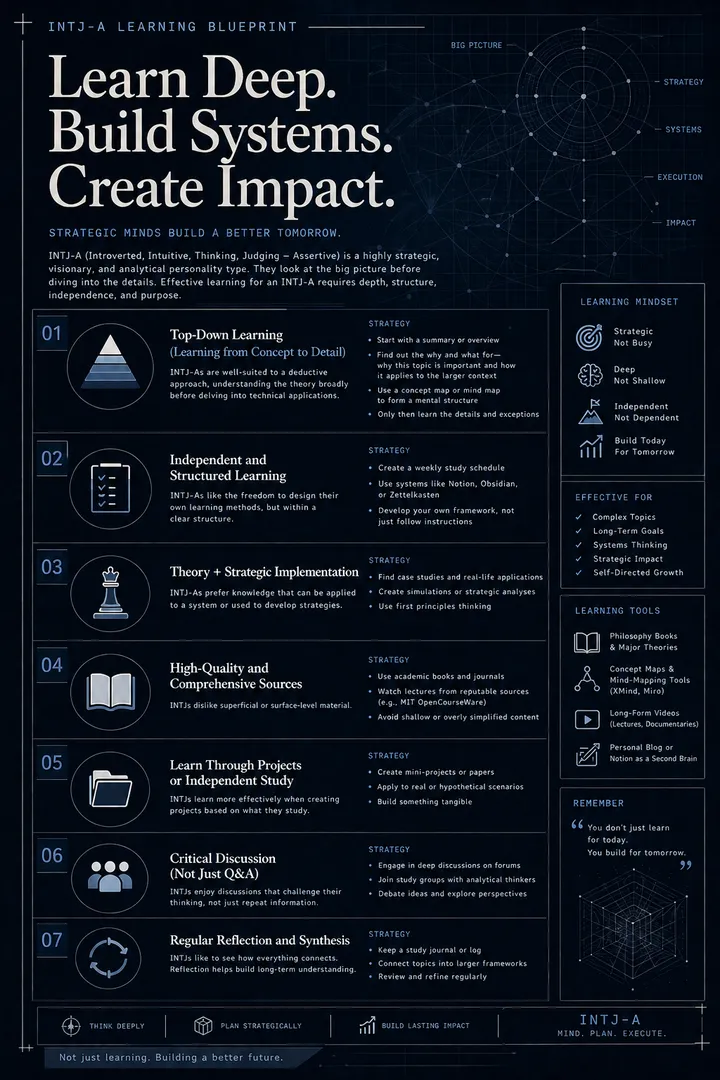
Learn How to Learn
Practical Learning
Satu hal yang lama sekali baru saya sadari: belajar itu sendiri perlu dipelajari
caranya.
Saya tumbuh tanpa banyak privilege. Tidak ada orang tua yang secara finansial mapan,
tidak ada lingkungan keluarga yang secara aktif mendorong pendidikan. Ketimpangan itu nyata —
dan saya rasakan sejak lama. Tapi hidup, dengan caranya sendiri yang kadang keras, tetap
menuntut saya untuk terus mengambil pelajaran — bahkan ketika tidak ada yang mengajari saya
cara belajar dengan benar.
Mungkin ini terdengar terlambat. Tapi saya percaya — tidak ada yang benar-benar terlambat,
selama masih ada kemauan untuk bertumbuh.
Pendidikan Formal dan Jalan yang Tidak Terduga
Pendidikan formal bukan medan yang ramah buat saya. Cognitive test adalah salah satu
titik lemah saya — dan kini saya mulai memahami bahwa ini bukan sekadar soal kemampuan,
melainkan ada mental block yang sudah lama mengakar.
Matematika, salah satunya — bukan pelajaran yang pernah saya nikmati. Bukan karena saya tidak
mampu secara potensial, tapi karena cara mengajarnya tidak pernah menyenangkan dan tidak
pernah membuat saya merasa aman untuk tidak tahu. Matematika terasa seperti buah
pahit yang meninggalkan rasa takut, bukan rasa ingin tahu.
Saya masih ingat betul — bagaimana setelah lulus Vokasi Multimedia, saya
sangat ingin masuk jurusan Psikologi. Tapi nilai rapor tidak cukup, dan jalur
beasiswa terasa terlalu jauh untuk dijangkau. Pada akhirnya, jalan hidup membawa saya ke dunia
teknologi — dan justru di sinilah saya mulai menyadari bahwa pendidikan sejati punya
kurikulumnya sendiri, dan ia ditemukan dalam kehidupan nyata.
Apa yang Sebenarnya Saya Pelajari tentang Belajar
Seiring waktu, saya mulai menemukan berbagai pendekatan yang tidak pernah diajarkan
sebelumnya — cara belajar yang benar-benar sesuai dengan diri saya sendiri.
Top-Down Learning adalah fondasi utama saya. Sebelum masuk ke detail
teknis, saya selalu butuh melihat mengapa topik ini penting dan bagaimana posisinya
dalam gambaran yang lebih besar. Peta konsep dan mind map bukan sekadar alat
— itu adalah cara saya membangun struktur mental dari sebuah materi sebelum mulai
mempelajarinya lebih dalam.
First Principles Thinking adalah cara berpikir yang paling alami
bagi saya. Daripada mengikuti cara yang sudah ada, saya cenderung memecah masalah sampai ke
asumsi paling dasarnya, lalu membangunnya ulang dari sana. Ini yang membuat saya sering
terlihat “tidak konvensional” — bukan karena ingin tampil beda, tapi karena cara
ini memang bekerja untuk saya.
Project-Based Learning adalah cara saya memvalidasi pemahaman.
Membuat mini-project, tulisan, atau analisis dari materi yang dipelajari — bukan
hanya membuat ilmu terasa nyata; ini juga cara saya memastikan bahwa saya tidak sekadar tahu,
tapi benar-benar bisa menggunakan apa yang dipelajari.
Metakognisi, terakhir, adalah kesadaran bahwa untuk bisa belajar dengan
efektif, saya perlu tahu cara belajar yang efektif. Metakognisi adalah kemampuan
berpikir tentang cara berpikir kita sendiri — mengevaluasi apakah strategi yang digunakan
benar-benar bekerja, dan berani mengubahnya kalau tidak sesuai.
Satu Kecerdasan yang Saya Syukuri
Di tengah semua keterbatasan pendidikan formal yang pernah saya alami, ada satu hal yang saya
akui sebagai kekuatan — sesuatu yang pelan-pelan mulai bisa saya banggakan: kemampuan mengenal
diri sendiri.
Dalam teori Howard Gardner tentang kecerdasan majemuk, ini disebut
Intrapersonal Intelligence. Kecerdasan intrapersonal adalah
kapasitas untuk memahami diri sendiri secara mendalam — mencakup kesadaran diri, introspeksi,
dan kemampuan merefleksikan pikiran, emosi, motivasi, serta tujuan hidup. Cenderung menjadi
pembelajar mandiri yang mencari makna dari apa yang mereka lakukan, dan mampu menilai
kekuatan serta kelemahan diri secara jujur.
Ini bukan kecerdasan yang diuji dalam seleksi masuk universitas. Tapi justru inilah yang
membuat saya masih bisa terus belajar sepanjang hidup — karena mengenal diri sendiri
adalah pondasi untuk tahu cara belajar yang paling sesuai dengan kita.
Saya tidak tahu apakah ini terlambat atau tepat waktu. Yang saya tahu, belajar cara belajar
adalah investasi paling jujur yang bisa saya lakukan untuk diri sendiri — sekarang, bukan
demi gelar atau nilai, tapi demi menjadi manusia yang terus tumbuh seutuhnya.
#LearnHowToLearn
#IntrapersonalIntelligence #Metakognisi #FirstPrinciples #TopDownLearning
#ProjectBasedLearning
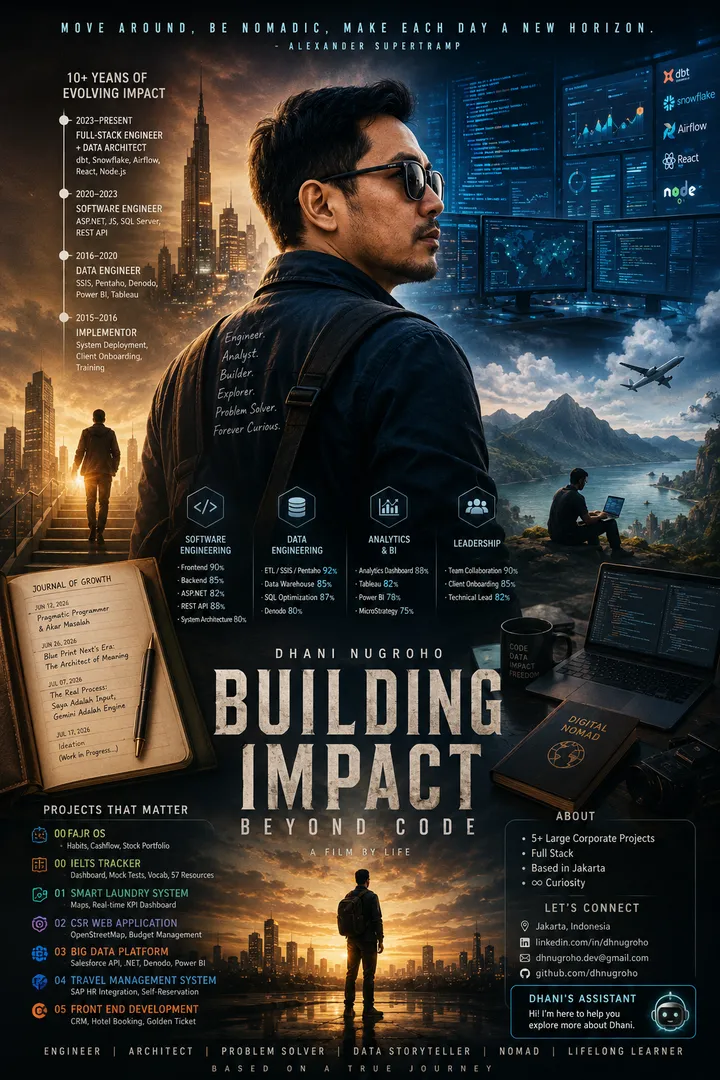
Creative Reset: AI, Desain & Eksperimen Visual
Coping mechanism
Break sejenak dari minggu yang cukup padat. Deadline ketat,
cognitive load tinggi dan sistem yang menuntut presisi logika
end-to-end — tapi ada AI yang membantu code generation sebagai
assistant, beban mental tetap terasa nyata. Shifting ke hal kreatif di akhir
pekan jadi cara yang tepat untuk mereset fokus.
Refleksi singkat, semasa vokasi Multimedia saya sudah bersentuhan langsung
dengan dunia desain — poster, vector dan animasi. Dulu, mengedit foto atau
membuat vector ilustrasi bisa menghabiskan waktu seharian. Sekarang, proses
yang sama bisa diselesaikan AI dalam hitungan menit.
Apakah ini arah yang baik atau buruk? Jawabannya bergantung pada bagaimana kita membaca
realita yang sedang berjalan.
Saya mencoba mengikuti tren instant poster generation dari
GPT — hasilnya cukup menarik. Dimulai dari sebuah eksperimen sederhana: foto
LinkedIn saya yang menghadap ke depan (full face, frontal) diubah
menjadi side profile (sudut 90°) dalam beberapa menit tentunya dengan
prompting yang sangat detail output-nya akurat secara proporsi wajah dan
terasa natural bukan sekadar filter atau crop dan sebagai konten dasar posternya
berasal dari hasil scraping web portfolio ini dan berikut hasilnya...
#CreativeReset #AIDesign
#PosterGeneration #GPT #PromptEngineering #MultimediaVocational
The Real Process: Saya Adalah Input, Gemini Adalah Engine
Behind the Notes of Note 1 and Note 2.
Menyingkap prompting dibalik layar. Note 1 (Evolusi Karir) dan Note 2 (Cetak Biru 5
Tahun) bukan murni hasil dari ketikan saya. Tugas saya adalah melakukan
ideasi, menuangkan gagasan mentah dan menyiapkan intisari pengalaman ke dalam
kolom prompt Gemini. AI yang melakukan kompilasi, merapikan struktur dan mengeksekusi
sintaks.
Penting untuk digarisbawahi: Proyeksi jangka panjang pada Note 2 bukanlah data fiktif
atau tebakan acak AI. Output tersebut merupakan hasil Predictive Modeling
yang mengolah data input historis saya (Note 1), lalu memetakannya secara logis menggunakan
referensi ilmiah yang valid dan teruji (Psikologi Kognitif, Stoikisme, Manajemen Strategi dan
Behavioral Science). Menginterpretasikan saya sebagai Data Source yang
otentik dan
Gemini adalah processing engine yang memvalidasinya lewat sains.
#HumanPlusAI #PromptEngineering
#AppliedAI #PredictiveModeling #DataPipeline #ScientificValidation
Dapur di Balik Catatan:
Bagaimana Data Pipeline Mental
Ini Bekerja
Dokumentasi praktis proses kolaborasi manusia dan LLM—mengubah intuisi berantakan menjadi arsitektur catatan yang valid dan berbasis referensi ilmiah.
Jangkar Referensi: Sweller (1988) — Cognitive Load Theory: Kebutuhan sistem penyaringan data otomatis untuk mencegah kelumpuhan memori kerja otak akibat Information Overload.
Jangkar Referensi: Shi, et al. (2016) — Edge Computing Framework: Validasi perpindahan ke sistem lokal/mandiri untuk kedaulatan data & efisiensi energi (modern permaculture).
Jangkar Referensi: Epstein (2019) — Range: Keunggulan generalis lintas domain dalam mengurai rantai masalah makro pada lingkungan yang disruptif.
Jangkar Referensi: Newport (2019) / Long & Averill (2003) — Digital Minimalism & Positive Solitude: Memposisikan teknologi di bawah kontrol mindfulness untuk otonomi penuh kehidupan.
"AI menyempurnakan struktur dan penyajian data masa depan saya. Namun arahnya valid, karena sistem prediktif ini menggunakan sejarah nyata saya sebagai Data Sources."
Blue Print Next's Era: The Architect of Meaning
Jika 10 tahun ke belakang adalah tentang akumulasi kapabilitas teknis, maka 5 tahun ke depan adalah tentang Kedaulatan Berpikir.
Jika 10 tahun ke belakang (Note 1) adalah tentang akumulasi kapabilitas teknis dan arsitektur
data, maka
5 tahun ke depan adalah tentang Kedaulatan Berpikir. Di era di mana AI mampu
mereplikasi kode dan komputasi dalam hitungan detik, diferensiasi manusia tidak lagi terletak
pada
execution speed, melainkan pada ketajaman mendefinisikan masalah.
Menatap 2026–2031 bukan lagi tentang mengumpulkan tumpukan teknologi baru, melainkan
mengadopsi
metode Reverse Thinking—memulai dari dampak nyata yang ingin
diciptakan, menjaga kejernihan mental lewat kesendirian strategis (solitude), baru
menarik
mundur arsitektur teknologi pendukungnya.
#ReverseThinking
#DataTechnovation
#MindfulArchitect #NextEraBlueprint #HumanAgency
The 2026 – 2031 Blueprint:
From Augmented to Autonomous
Technovation
Manifesto lima tahun ke depan: Mentransformasikan keahlian data menjadi arsitektur solusi mandiri yang berakar kuat pada nilai pragmatis dan ketenangan mental.
“Era baru tidak menuntut kita menjadi mesin yang lebih cepat, melainkan menuntut kita menjadi manusia yang lebih dalam. Menggali akar masalah dalam keheningan, bertindak dengan pragmatisme yang presisi.”
Pragmatic Programmer & Akar Masalah
Setelah 10+ tahun melewati implementasi, data engineering, hingga full-stack development — satu hal yang tidak pernah berubah.
Setelah 10+ tahun melewati implementasi, data engineering, hingga full-stack development —
satu hal
yang tidak pernah berubah: teknologi terbaik sekalipun akan gagal jika kita tidak memahami akar
masalahnya
dulu.
Menjadi pragmatic programmer bukan soal menguasai stack terbaru atau tool AI yang sedang viral.
Ini soal
moral dan etika dalam menyelesaikan masalah. Melihat ke dalam dulu, mencari solusi yang tepat,
baru
kemudian memilih teknologi yang sesuai.
AI tidak mengubah prinsip ini. Justru mempertegas: garbage in, garbage out — berlaku untuk
data,
untuk prompt, dan untuk keputusan bisnis.
#PragmaticProgrammer
#DataEngineering
#SoftwareDevelopment #AIEthics #TechEvolution
Future Career Path : Evolusi Karir
& Insight di Era
AI
10+ tahun perjalanan — dari deployment ke arsitektur data, menuju eksplorasi AI yang berakar pada pemecahan masalah nyata.
- Eksplorasi AI — tapi selalu tanya masalah nyata apa yang dipecahkan?
- Deep dive ke root cause sebelum deploy model
- AI sebagai amplifier, bukan pengganti critical thinking
- Deliver solusi konkret untuk client — bukan proof of concept
Di era AI yang bergerak cepat, keunggulan bukan pada siapa yang paling cepat adopsi tools terbaru — melainkan pada siapa yang cukup bijak untuk memahami masalah nyata sebelum memilih solusi.
Engineer building systems,
end-to-end.
I'm a Senior Fullstack Engineer based in Jakarta with 10+ years of experience designing, architecting, and delivering enterprise-scale web applications backed by deep data platform expertise.
Over the past decade, my journey has spanned implementation, data engineering, backend architecture, and frontend development—each phase building on the last. This cross-domain foundation allows me to bridge the gap between complex data models, business logic, and intuitive user experiences with clarity and reliability.
I approach software delivery through an Agile-aligned, stakeholder-embedded model—collaborating directly with business heads and technical teams from discovery to production. By gathering requirements iteratively and maintaining clear, transparent communication, I help organizations adapt to evolving business realities and accommodate in-flight changes while keeping delivery focused and dependable.
Beyond delivery mechanics, I apply Design Thinking as a problem-solving lens—empathizing with users, driving divergent and convergent ideation, prototyping early, and co-creating solutions that hold up under real-world use. This keeps the UX perspective embedded throughout, not bolted on at the end.
My portfolio includes custom ERP/CRM data ingestion engines with automated spreadsheet cleansing, multi-regional operations dashboards with real-time SLA tracking, geospatial CSR platforms, and enterprise integrations with SAP and HR systems.
My core engineering stack centers on modern web technologies (.NET Core API, Vue.js, FastAPI, Python) supported by strong database and data pipeline foundations (SQL Server, BigQuery, Snowflake, SSIS, Pentaho). I also build practical workflow automations using n8n and explore AI integrations focused on tangible operational value.
Based in Jakarta and open to full-time senior engineering roles, technical leadership, and high-impact enterprise opportunities. If you are looking for an engineer who focuses on understanding root causes and building maintainable solutions — let's connect.
“Understand the root cause first. The right solution — and the right technology — will follow.”
— Operating principleLet's build
something together.
Have a project in mind or just want to connect? I'm always open to new opportunities and collaborations.